The Great Meadow Is Returning: A Nine-Metre Forest Has Grown on the Former Kakhovka Reservoir Bed
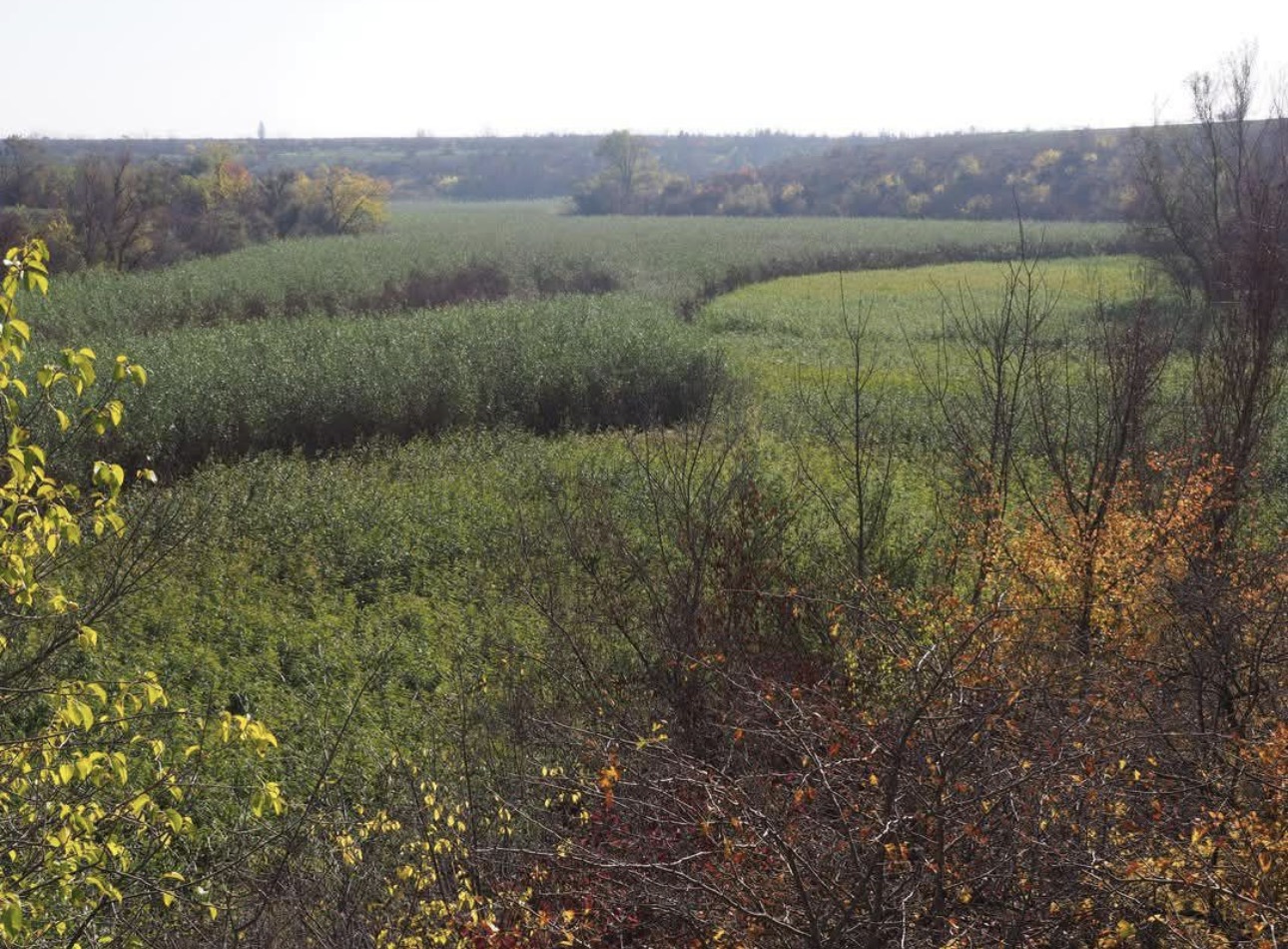
Where the vast waters of the Kakhovka Reservoir stretched just three years ago, trees are now growing, wild animals are returning, and new natural habitats are emerging.
Following one of the largest environmental disasters in modern Ukrainian history, nature is demonstrating a remarkable ability to recover.
Scientists believe that the Great Meadow, or Velykyi Luh, a unique historical ecosystem submerged in the mid-20th century, is gradually returning along the banks of the Dnipro River.
The latest research findings were shared by Ivan Moisienko, Doctor of Biological Sciences, Professor and researcher at the Askania-Nova Biosphere Reserve, in an interview with Ukrinform.
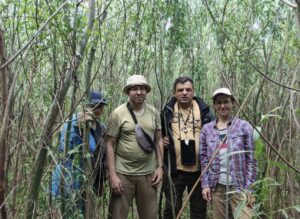
After Russian forces destroyed the Kakhovka Hydroelectric Power Plant dam on June 6, 2023, vast areas of the former reservoir bed emerged from beneath the water.
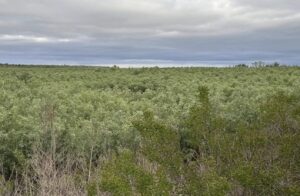
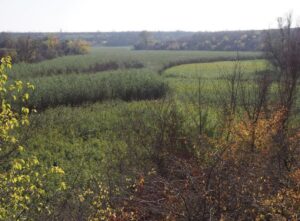
Within months, willows, poplars and other plants began taking root across the exposed landscape.
The speed of the young forest’s development surprised even experienced botanists.
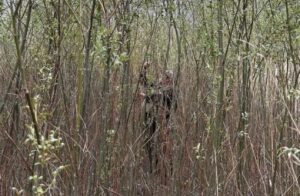
According to the results of a scientific expedition conducted in September 2026, the tallest willow measured by researchers had reached nine metres.
Just one year earlier, the maximum recorded height of willows at the research sites was 7.08 metres. The tallest poplar measured by Moisienko’s team had grown to six metres.
Another remarkable development is that the young forest has already begun naturally regulating its own density.
Initially, as many as 90 young trees could emerge within a single square metre. Over time, weaker plants gradually die off, leaving more room and resources for stronger trees.
This is a natural process of forest development, and scientists now have a rare opportunity to observe it almost from the very beginning.
Not Just Vegetation, but the Return of the Great Meadow
Before the construction of the Kakhovka Hydroelectric Power Plant, the lower Dnipro River was home to a complex natural ecosystem known as the Great Meadow.
It included floodplain forests, wetlands, meadows, river channels and lakes.
Much of this landscape was submerged in the 1950s when the Kakhovka Reservoir was created.
Today, researchers are observing the return of plant communities that once characterised the region.
“The process of restoring the Great Meadow is moving in the right direction,” Ivan Moisienko emphasised.
The first species to reclaim the territory are fast-growing trees, particularly willows and poplars.
Over time, the structure of the forest becomes more complex, with new plant species establishing themselves and wildlife gradually returning.
According to the scientist, young oak trees have also been spotted in the area.
This is especially significant because oak forests were once an important part of the historical Great Meadow ecosystem.
However, the development of a mature ecosystem will take much longer.
Young trees do not yet have the cavities needed by certain bird species, while the dense vegetation can make movement difficult for larger animals.
Hundreds of Plant Species and the Return of Wildlife
Scientists continue to document new plant species across the exposed reservoir bed.
A study published in 2026 in the Chornomorski Botanical Journal reported that the number of recorded vascular plant species increased from just 11 in June 2023 to 343 by October 2025.
According to Ivan Moisienko’s preliminary assessment, following the 2026 expeditions, the total may have already reached at least 400 species.
This figure still requires confirmation after the collected scientific material has been fully analysed.
Wildlife is also returning.
Researchers have reported the presence of small mammals, polecats and wild boars.
During one expedition, scientists also filmed a rare Caspian whipsnake, a species listed in Ukraine’s Red Data Book.
The gradual return of different organisms suggests that the area is developing into far more than a landscape covered with greenery.
It is becoming a complex network of interconnected natural habitats.
Even Grasslands Submerged for Decades Are Recovering
One of the most interesting discoveries from recent expeditions concerns the areas surrounding the former reservoir.
Alongside floodplain forests, rocky and sandy steppe ecosystems are beginning to recover.
Before the reservoir was created, the slopes of the Dnipro supported distinctive grassland plant communities typical of southern Ukraine.
Many of these habitats disappeared following the flooding.
Now, as the water has receded, steppe vegetation is reappearing on exposed rocky surfaces and sandy soils.
According to Moisienko, if the former reservoir and adjacent natural areas are considered together, a connected natural landscape covering nearly 300,000 hectares could eventually emerge.
This represents enormous potential for restoring biodiversity in southern Ukraine.
Why Is Nature Recovering So Quickly?
At first glance, it may seem paradoxical that such rapid plant growth could follow a devastating environmental disaster.
However, ecology offers an explanation.
When the reservoir bed was exposed, it retained moist sediment deposits rich in nutrients essential for plant growth.
These newly available surfaces were quickly colonised by pioneer species — plants capable of establishing themselves in recently disturbed or newly exposed environments.
This process is known as ecological succession, the gradual change in plant and animal communities as an ecosystem develops.
Botanical research shows that the vegetation of the former Kakhovka Reservoir is already changing.
Alongside the first colonising plants, perennial grasses and other species characteristic of the natural floodplains of the Lower Dnipro are gradually becoming established.
However, the ecosystem’s future development will depend on numerous factors, including soil moisture, droughts, flooding and climate change.
War Remains a Major Threat to Scientific Research
Despite the encouraging signs of ecological recovery, scientists continue to work under dangerous conditions.
Russian shelling and drone attacks severely limit opportunities for field research.
As the security situation deteriorated in autumn 2026, Ivan Moisienko’s team moved part of its research activities from Kherson Oblast to Khortytsia Island in Zaporizhzhia.
Researchers can currently study only accessible sections of the former reservoir.
To better understand the changes taking place across the entire territory, scientists plan to make greater use of satellite imagery.
This will allow them to monitor vegetation development even in areas that are too dangerous to visit.
Has an Environmental Disaster Become an Ecological Miracle?
The revival of the Great Meadow does not diminish the scale of the tragedy caused by the destruction of the Kakhovka dam.
The disaster led to catastrophic flooding of populated areas, loss of human life, destruction of aquatic ecosystems and severe disruptions to water supplies and economic activity.
At the same time, the processes now being documented by botanists reveal another side of the story: nature’s extraordinary capacity for regeneration.
This does not mean that the environmental and humanitarian consequences of the catastrophe can be offset by the emergence of a new forest.
However, any decisions about the future of this territory must take into account the natural ecosystems that are already developing.
The Great Meadow is returning — gradually, unevenly, but according to nature’s own laws. The challenge now is not only to study this recovery, but also to ensure that this unique opportunity for ecological restoration is not lost.
This article was prepared by MediaKyt based on an interview with Ivan Moisienko published by Ukrinform, information from the National Academy of Sciences of Ukraine, and scientific research published in the Chornomorski Botanical Journal.
Sources:
- Ukrinform — Interview with Ivan Moisienko
- National Academy of Sciences of Ukraine — Research on Emerging Ecosystems
- Chornomorski Botanical Journal — Scientific Research
Share this content:


Post Comment