The Climate Has Already Changed. What Is Happening to Ukraine — and Why It Concerns Everyone
When people talk about climate change, it can be difficult to picture what it actually means. A rise of one or one and a half degrees does not sound as frightening as a missile strike, a flood, or a wildfire. It may seem that one degree cannot change much. In reality, it can change a great deal.
Climate change does not mean that every single day has simply become one degree warmer. It changes the entire system: the frequency of heatwaves, the duration of droughts, the amount of water in rivers, rainfall patterns, and the risks of floods, wildfires, and urban flooding. In Ukraine, these changes are no longer only predictions for the distant future — they are already visible around us.
Ukraine Is Already Getting Warmer
According to data cited by the Centre for Environmental Initiatives “Ecoaction,” Ukraine’s average annual temperature has increased by around 1.2°C over recent decades. All seasons have become warmer.
The changes are especially noticeable in winter and summer. Winters are becoming milder, while long periods of extreme heat are occurring more often in summer. But the problem is not simply that we need to use air conditioning more frequently.
The higher the average temperature, the more water evaporates, the faster soils dry out, river flow changes, and the risks of droughts and wildfires increase. At the same time, warmer air can hold more moisture, which means rainfall may become less frequent but much more intense. This is why the same region can go for weeks or months with little rain and then receive almost a month’s worth of precipitation within just a few hours.
Drought and Heavy Rainfall Are Two Sides of the Same Problem
At first glance, it may sound contradictory: how can the climate crisis cause both drought and flooding? Yet that is exactly what happens.
As temperatures rise, water evaporates more quickly. In some regions, this leads to drier soils and water shortages. Elsewhere, moisture accumulated in the atmosphere returns in the form of extremely heavy rainfall.
Instead of steady rain over several days, a city may receive an intense downpour within just a few hours. For Ukrainian cities, this can be especially dangerous. Large areas of asphalt, dense construction, a lack of green spaces, and overloaded drainage systems prevent water from quickly soaking into the ground.
The consequences are easy to see after severe storms: flooded streets, transport disruption, and damaged buildings.
There May Be Less Water
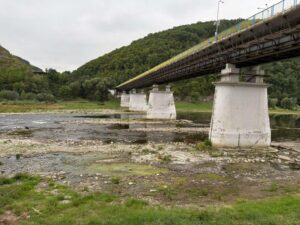
One of the most tangible consequences of climate change for Ukraine is the changing flow of its rivers. According to studies cited by Ecoaction, surface water runoff is expected to decrease in much of Ukraine during the 21st century.
Among the most vulnerable are the basins of the Southern Bug, the Prypiat, and the Dniester. By the end of the century, water flow in some river basins could decline by around 30%, while the situation for smaller rivers may become even more serious.
For southern Ukraine, this issue is particularly important. The Dniester is not simply a river on a map. The water supply of a vast area, including Odesa Region, depends on its condition.
This means that discussions about shrinking rivers are no longer only about nature. They are also about drinking water, agriculture, the economy, and the security of cities.
What Will Happen to the Black Sea?
While rivers may lose water, global sea levels are rising. There are two main reasons: melting glaciers and the thermal expansion of water. As water warms, it takes up more space.
For Ukraine, this creates the risk of rising levels in the Black and Azov Seas. According to research cited by Ecoaction, by 2100 the area potentially exposed to flooding in southern Ukraine could reach around 650,000 hectares, and up to one million hectares when storm surges are taken into account.
Odesa and Kherson regions, as well as Crimea, are among the most vulnerable areas. For Odesa, this means risks that go far beyond beaches. Residential areas, coastal ecosystems, roads, industrial facilities, ports, and other critical infrastructure could all be affected.
The Black Sea Is Changing Too
Warming affects more than just sea level. Water temperature is one of the fundamental factors shaping a marine ecosystem. It influences where species live, oxygen levels in the water, reproduction, and the spread of invasive species.
When conditions change too quickly, not all species are able to adapt. This is why the climate crisis is also a biodiversity crisis.
An ecosystem functions like a complex network. The disappearance of one species can affect many others — from microorganisms to large marine animals.
But Hasn’t the Climate Always Changed?
Yes. Earth’s climate has changed many times throughout its history. But the key issue today is the speed of change.
Current warming is happening extremely rapidly, and scientists identify human activity — above all, the burning of coal, oil, and gas — as the main driver.
Greenhouse gases trap heat in the atmosphere. The greenhouse effect itself is essential for life: without it, the Earth’s average temperature would be around minus 18°C. The problem began when greenhouse gas concentrations started rising sharply after the Industrial Revolution.
Why One Degree Matters
The human body may barely notice the difference between +20°C and +21°C. The planet does.
Global average temperature is calculated from millions of measurements across vast areas. That means even a one-degree increase represents an enormous amount of additional heat in the climate system.
This affects the circulation of air and water, the amount of ice on the planet, rainfall patterns, and the frequency of extreme weather events. Global warming is therefore not simply about summers becoming slightly hotter. It is about changing the rules by which the climate system operates.
Can We Do Anything About It?
It is no longer possible to avoid all the consequences that have already been set in motion. That is why climate policy today focuses on two directions at once: reducing greenhouse gas emissions and adapting to the changes that can no longer be prevented.
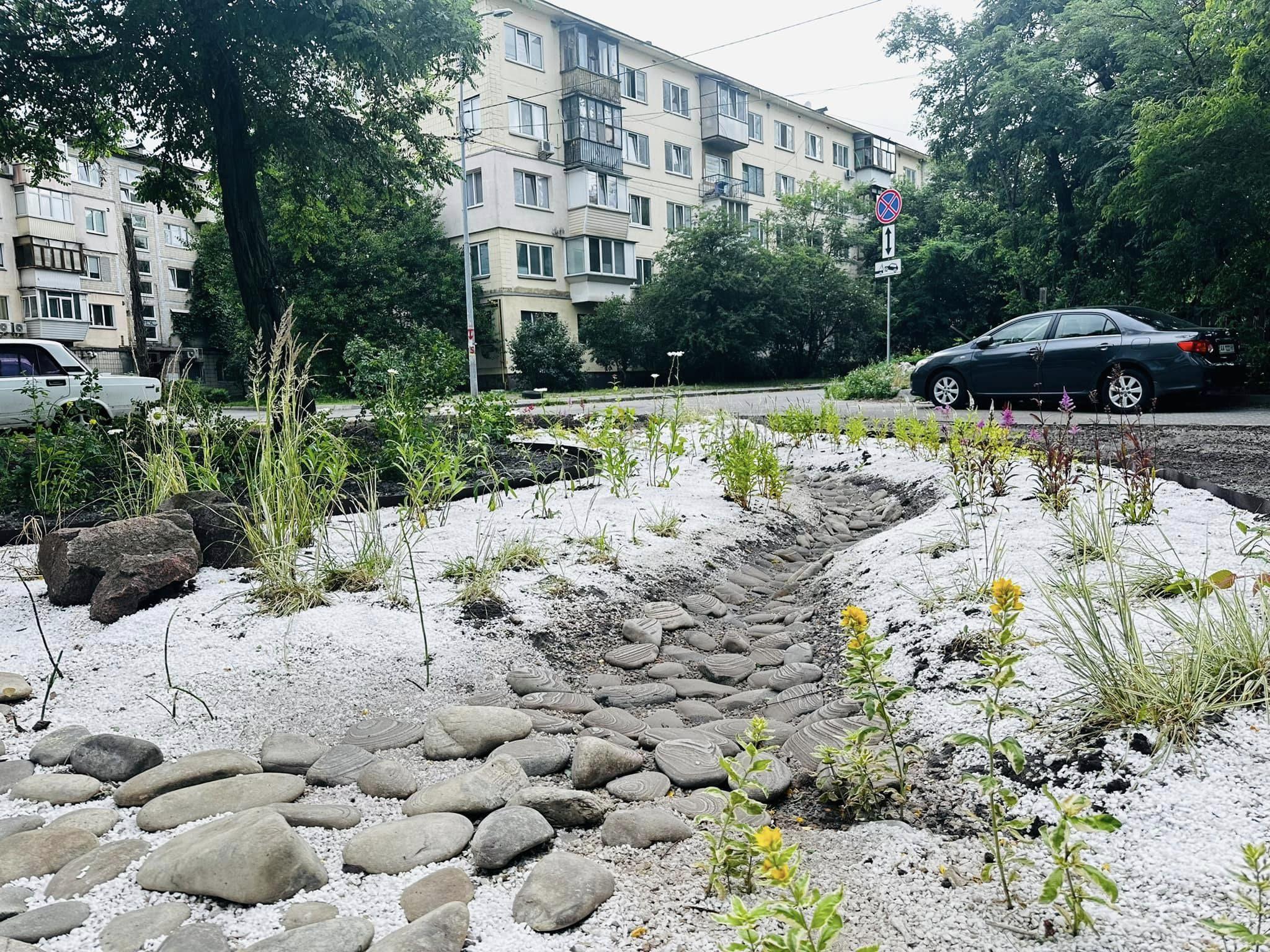
Adaptation means preparing cities and communities for a changing climate. Possible measures include creating more green spaces, restoring rivers and water bodies, building rain gardens, replacing continuous asphalt with permeable surfaces, developing early-warning systems for heatwaves and floods, protecting coastlines, and updating building standards.
Cities in different countries are already using these approaches. Some, for example, are removing parts of paved surfaces and replacing them with soil, trees, and grass so that rainwater can soak into the ground and urban areas heat up less.
Ukraine also has a Strategy for Environmental Security and Climate Change Adaptation through 2030. Climate issues do not disappear because of the war.
On the contrary, reconstruction creates an opportunity not to rebuild outdated infrastructure in exactly the same form, but to make cities more resilient to heat, drought, heavy rainfall, and other challenges of the coming decades.
This Is No Longer a Problem for Future Generations
For a long time, climate change was described as something our children or grandchildren would have to face. That description is already outdated.
We are living through these changes now. When rivers become shallower, when cities cannot cope with intense rainfall, when dangerous temperatures last for weeks, and when the Black Sea itself is changing — this is the climate crisis.
It does not always arrive as one dramatic catastrophe. More often, it consists of dozens of smaller changes that gradually become our new reality.
That is why we need to talk about climate change not when the sea reaches our homes, but now.
Share this content:



Post Comment